
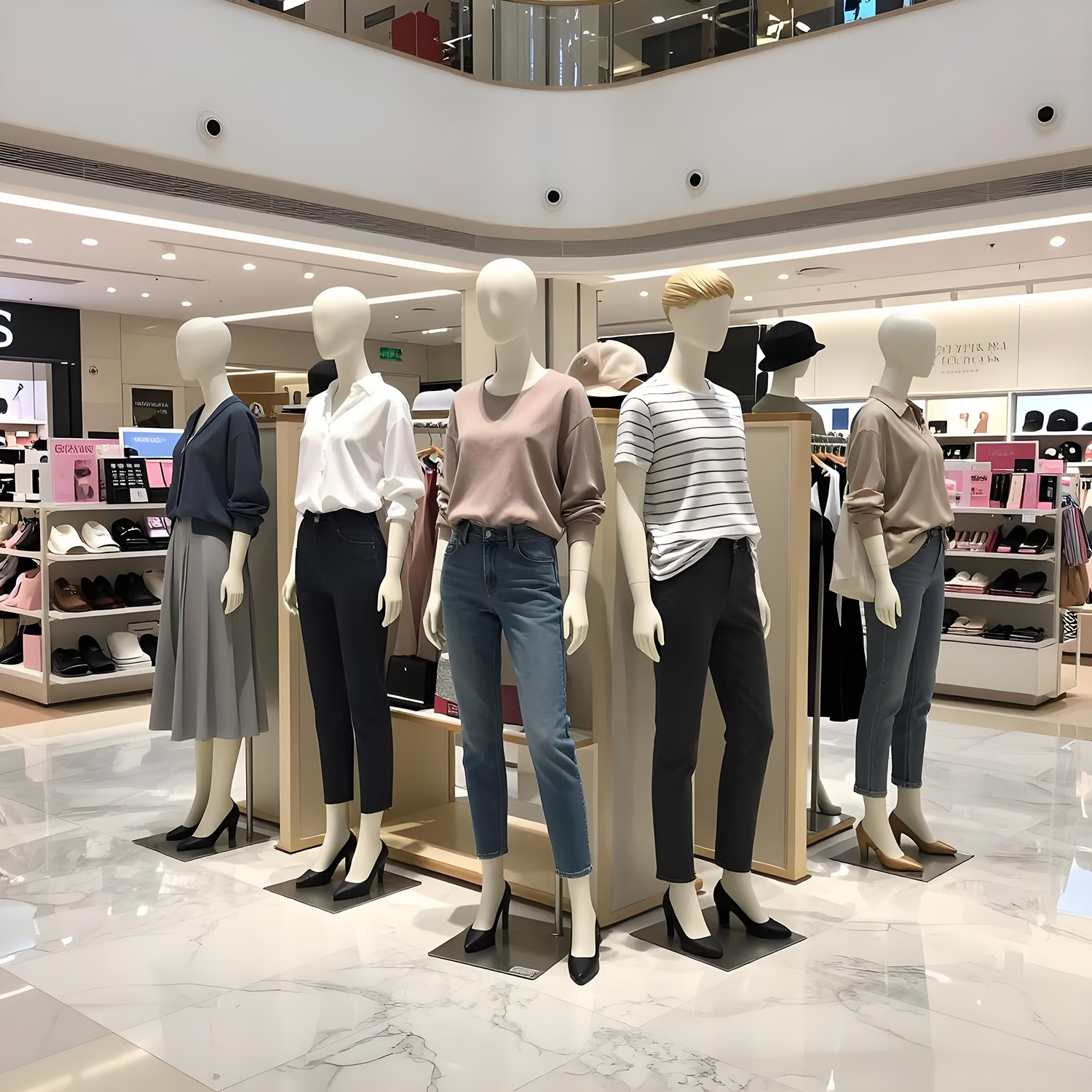
Storefronts act as salespeople for your business. Excellent window displays can entice potential customers and increase sales. The United States has a large and busy population. Here effective window displays are critical for the success of a retail store.
Window displays provide an opportunity to attract new customers and encourage repeat business by creating an environment that builds customer loyalty. Well designed window displays incorporate elements of product and store merchandising and integrate components of a store’s philosophy and mission in a ways that entice customers to enter the store.
This manual demonstrates ways to facilitate the design of marketing displays that generate sales. We explore ways to establish a marketing focus that supports a store’s sales goals as well as ways to effectively test and adjust store window displays.
The most important element of a store display is being able to measure and evaluate the display.
To set meaningful goals for a store window display one must understand what the store is trying to achieve by creating the window display.
Aesthetically pleasing window displays are easy to create but impactful window displays are created with a variety of elements that serve a larger business purpose.

What do you want your display to communicate?
Designs become a lot easier when you understand what the end goal is, Is it getting more people to walk inside your store? Maybe it is bringing attention to a particular service? Your display can also be used to promote a new product or to reward your frequent shoppers by showcasing your loyalty program.
Once you determine your objective it becomes a lot easier to understand your next course of action. If your goal is to collect more email addresses then your display should be designed in a way to effectively communicate that to your customers. It may also include a special discount or offer that is only given to customers on your email list.
Your display should be designed to support your promotions.
Your window display plays a major role in capturing your customers’ attention. If you want to be competitive then your display should be designed to support your current promotions. Offering your customers a new product or an exclusive deal? Your window display should be designed to represent your promotional effort.
A good window display helps customers interpret your brand message. Consistent displays develop strong brand identities and give customers the ability to recognize a company based on their advertising efforts.
– Specific goals such as the number of sales or sign ups for your email list are some examples of the type of goals you should set.
In order to improve your business you need to be able to measure your progress and see which aspects of your business need work. Having measurable goals allows you to do that. You can work to better understand how different aspects of your business affect your bottom line and change your goals to better align with your business needs.
- Goal Type
- Primary Metric
- Success Indicator
- Increase Sales
- Sales
- Revenue
- Gain/ Increase New Customers
- Loyalty
- Email List Sign Ups
- Online Mentions
- Brand Awareness
It’s important to identify and align your goals to truly understand your audience and convert your window displays, Having a data-centered approach to visual merchandising ensures that you get a positive return on your investment.
Know your Audience
Once you understand the wants and needs of your audience you can better strategize to capture their attention, This requires an analysis of your direct competition and an understanding of what customers in your target market want and need.
Understand shopper behavior based on
The average speed of foot traffic determines how quickly you can capture a potential customer’s attention. If your store is located in a city your window displays have to be designed to capture a person’s attention in just a few seconds.
The ideal distance from which a person can view your display varies. What may look good from one distance may appear poorly designed from another. Test your display to see how it looks from varying distances.
Analyze competition and local environment
In designing an effective display you must take into consideration factors outside your control like the location of other businesses the entertainment and dining options in the area and the flow of people to and from other places.
Look at the displays of the other stores on your block to see what kind of displays are successful. If your store is near a busy subway stop your display should incorporate big bold graphics to capture people’s attention and give people a reason to enter your store.
Modify your display based on time and weather
A good retail display should work in all conditions and at all times but to make your display work the way you want you may have to adjust it to different conditions. For example during the day Displays should use contrasting colors so they don’t get too dull and at night displays should use a warmer color palette. And finally the materials you use in your display should be sturdy so they don’t get ruined too easily.
Build a Compelling Creative Concept
Creativity and originality are vital to great window display design. If you try to convey too many ideas with your display you run the risk of communicating nothing at all. Simple concepts lend themselves better to grabbing and holding the attention of the general public.
Choose a single concept and run with it.
If you can focus on a single idea your display will stay with your target audience longer. While using different elements in your display consider if they are all contributing to the same idea. The goal of a great display is to capture your audience’s attention long enough to communicate the idea and your store’s offering.
Utilize Display Design and your Products to Tell a Story
Customers are infinitely more willing to pay a slightly higher price if they feel they are purchasing something that will improve their quality of life, Window displays should tell a part of the story that encourages the customer to purchase the product, You should try to design your window displays in a way that explains to the customer how your products contribute to or improve their lifestyle.

Maintain Consistency with Branding
A window display should be an extension of your brand, If your store is known for selling high-end products your displays should also reflect that, For a stronger connection with your customers make your window displays reflect your current marketing campaigns.
Showcase your brand during the changing seasons
Using the change of the seasons as an opportunity to update your design can keep your brand up to date. Instead of using standard seasonal graphics challenge yourself to use your brand principles to convey the season. Using principles of design can help communicate an interpretation of the season and create a unique experience for your customers.
- Feature
- CONCEPT CLUTTER
- MESSAGE CLARITY
- CONCEPT CONFUSION
- Shopper Focus
- DISTRACTION
- Engagement
- BRAND IMPACT
- VISUAL APPEAL
Focusing on your brand design creates a cohesive look across your business, But an uncluttered design can achieve so much more, An engaging design can draw the eye towards your best selling items and create a experience that speaks to your customers.
Arrange Visual Elements
Using your storefront to display merchandise can help sell your products but only if the right items are chosen. Using a thematic or restriction approach can be a huge advantage and help sell your best products.
Create Restriction
Using restriction and a thematic approach towards product merchandising can help communicate your message quickly and clearly to your customer.
Create an immediate eye-catching display
The best window displays include a central focal point. This element should be displayed prominently and help draw in and capture the attention of potential customers. Be sure to consider size and/or location of other items to help highlight and feature your best-sellers.
Variety is the spice of life: Use height and scale to create harmony
To help encourage customers to examine elements of your display in a particular order be mindful of the relationship between various elements of your display. Use groupings of elements of various heights to promote a more interesting and less predictable display.
Help the supporting actors shine
While many elements of a display should help create context or provide a supporting role for the main actor be mindful of the relationship between supporting and context elements. Often in order to integrate elements that illustrate the use case of the main actor a display can include a variety of potential supporting actors.
Practical design
While your main goal should be to capture the interest of and attract potential customers to your display it is important that your design be mindful of the needs of your employees as well. Make sure your elements are properly secured and that your employees are able to easily clean the display.
Capturing and Guiding Attention with Color and Light
The creative use of color and light in a window display captures a viewer’s attention and draws it to specific areas in the fashioning of a desired pathway.
Utilize colors that align with your brand and current campaign.
Window displays are valuable opportunities to build recognition of your brand, Use colors that align with your current campaign to make your display cohesive and intentional, Shoppers should be able to immediately connect your window display to the merchandise that is offered in your store.
Use contrast to display your message.
Contrast helps draw attention to specific message areas and merchandise. Consider framing your main focal area with bold colors that contrast the surrounding area. Use a dark background to display light merchandise.

Balance display and lighting.
There are a number of external factors that influence the quality and strength of lighting that helps to display merchandise. Use a balance of artificial and natural lighting to display your merchandise throughout the day.
Overcome obstructions caused by glare shadows and reflections to improve the visibility of your merchandise.
Reflections and glare on your glass cases can obstruct customers’ views to your prized merchandise. Various methods can be used to reduce such occurrences. For example you can place your spot lights at different angles. Anti-reflective films can also be used on your glass cases. Also careful placement of your spotlights can eliminate shadows.
Use appropriate light fixtures that reduce energy consumption.
As a retailer you have a responsibility to ensure that your displays remain attractive to customers for long hours, Therefore you should ensure that your lights consume less energy. Also the lights should be of high color brilliance to effectively showcase your merchandise.
Create Compelling Window Displays
Messages on your window displays have the potential to either attract or repel customers. The presence of well-designed signage in your window displays can significantly increase sales. If your signs are lengthy customers may not take the time to read your entire message.
Convey your USP in a few well thought out words
Your sign should have a single focus. A well-written sign may effectively communicate your message to customers and increase your sales.
Each word counts.
Put important information where people are likely to look
People can only really see information that is around four to six feet off the ground. This is where you should place your most important information. People usually will not look higher or lower and very few will look to the sides.
Use readable typography
When choosing fonts the main thing to consider is legibility, Bold and thin fonts work well as long as there is enough contrast between the font color and the background.
Provide important details
Any important information should be provided. Offering something at a discount? Include the price. Is this a sale that ends today? Inform people, Give people the information they need to make a purchase.
Simplify
Avoid using long or big words especially if they are unneeded, Giving people too many messages will only confuse them. Decide on your main goal for the display and only provide information related to that. The display should not contain distractions.
Edit your message before posting.
To create window displays that are on-brand and accessibleconsider two things. First you have your brand identity. The other is accessible design. If you’ve struck the right balance with these two elements your storefront has an inviting facade and a professional look.
Use brand elements in design
Window displays are an extension of your sales team. They should capture the essence of your brand. If you utilize your brand colors and fonts your customers start to recognize your store.
Make important elements large enough to read
When creating store displays keep in mind that font choice and message size impact whether your display is accessible to the public. Use large simple fonts to capture your message in an easy-to-read manner.
Always keep important elements of your display large and in an easy to read format. This concept is critical to the display design of any store and makes window displays easier to read for those with low vision.
Create a good use of empty space
Using too much clutter in a window display makes it hard for customers to locate items being promoted or sold. If you utilize too much space customers may become uncomfortable and may not read your display.
Pay attention to text and background colors
Using a good color contrast makes text easy to read. In your window displays make sure headings and important text is large enough to read from the street.
Make sure entrances sidewalks and accessible paths remain unobstructed.
If there is any obstruction to the free flow of pedestrian traffic in front of your store you become the owner of a store that is difficult to get to and difficult to get around in. No store owner wants that. Keep the thoroughfare in front of your store clear and use flexible and easy to move prop displays to showcase your offerings.
- Design Element
- Goal
- Best Practice
- Brand Identity Recognition
- Use of Same Logo and Color
- Retail Accessibility Inclusivity
- Large High Contrast Type
- Spatial Layout Clarity
- Unobstructed Pathways
- Safely Install and Display
A window display that serves its purpose creatively and positively to the store but presents a risk to shoppers and staff is no display at all. Safe window display designs serve the business and protects its staff and store reputation.
Use wire to secure window display elements.
All window displays and elements should be securely anchored.
Test window displays for stability and security.
Use materials that are stable and long lasting.
Choose materials that do not fade or crack with time.
Bright and bold paints and colors to retain window display appeal.
All adhesives are temperature-changing and shock-resistant.
Clean windows regularly and rotate displays.
Customers can judge the care and cleanliness of your business based on your window displays. Have employees wash the windows and display props and check the store window display set up for safety and wear at least weekly.
The display window must be checked for safety and wear. Glass must be cleaned for visibility. Props must be checked for safety and replaced if necessary.
Products must be rotated to maintain relevance. Adhesives must be shock-resistant. Damaged and out-of-date displays and ads must be removed. Protective covers must be removed to check the integrity of electrical components, Electrical components must be checked for shock and fire hazards.
Tuck electrical cords away to avoid clutter and tripping, Keep lighting elements clear of flammable materials, This along with other strategies helps us ensure the safety of our displays.
Improve Window Displays Increase Sales
Improving your store’s window displays can be good for business. When you test different displays you can use what you learn about how your customers engage with your store to enhance your overall business strategy and increase profits.
Shoot your Display
Take photos of your display from the viewing angle of your target customers. Being in the store doesn’t let you see what customers see and if there are issues with your display like glare or reflections you probably can’t see them. Walking a short distance and taking your customer’s eye-level view of your display helps you identify areas you may want to improve.
Compare different layouts messages and product combinations
A/B testing enables you to experiment with a range of visuals to attract the interest of online shoppers. Try different placements for your product focal points and assess the impact of variation in the boldness of headings. By systematically altering one aspect of your design at a time you can identify the design change that resulted in improved performance.
Analyze webpage data and customer feedback
The data tells you how effectively your window display worked. Keeping a record of the number of customers who visited your store each day and identifying which products sold the fastest helps you determine the most effective product highlights of your window display. Pay extra attention to the feedback from your frequent customers as this may help you understand which elements of your display your customers like the most or which elements create confusion for customers.
Change your display when interest and sales decrease
There is only a brief period of time during which a window display captures the interest of shoppers and sells the products featured in the display. You need to replace your window displays frequently to ensure that your potential customers do not lose interest in your business.
Your window display acts as your salesperson and can make or break a sale. You can combine your understanding of your customers and your business to create compelling display window designs.
Your store’s presentation is the first thing potential customers see. With attractive store windows and a well-designed storefront you can capture the attention of your target audience and convert shoppers who are just browsing.
Oftentimes the difference in results is due to the number of factors that are tested, You should periodically evaluate the results of your marketing efforts and make adjustments to your store presentation to better serve your customer.

FAQ
What is the ideal time frame to display merchandise in a store window?
If you want to keep your store’s window displays eye-catching you should change your displays every 2 to 4 weeks, This is especially true for stores in high constant customer traffic areas like stores on Michigan Avenue. Refreshing your store displays can not only help new customers see your store and merchandise but also can help formerly indifferent customers become purchasing customers.
What can you do about reflections and glare in storefront windows?
Investing in higher quality more powerful LED lights can help you overcome issues with window displays. If your store’s interior is lit well the displays can be placed closer to the window. Also using a higher contrast display can help your store’s merchandise and displays be seen even when the sun is out.
What is a focal point and why is it important?
A focal point gives a window display a center attraction, Without a center attraction customers can easily become confused when interpreting the message of the display. A clever use of hierarchy and a clear path to guide a customer’s eye to a store’s sign is crucial in ensuring a display’s message is clear.
Are there benefits to using accessible design in window displays?
Absolutely. Using large and legible text benefits all customers and using good color contrast and bold colors ensures text is legible. Further ensuring your props and fixtures do not block accessible pathways and entrances allows all customers to enter your store and enjoy your window displays.
What tells me how effective my window displays are?
You can tell how effective your window displays are by setting goals for example increasing the amount of foot traffic to your store increasing the sales of the products featured in your window display and increasing the number of email addresses collected by your window display. Many companies test a couple of different ideas (A/B testing) to see which one the local customers prefer by tracking which one of the ideas increases their sales the most.
How can I avoid merchandise damage from sun and other elements?
Products exposed to the elements can damage and fade, You can find window film that blocks UV rays, During the spring and summer some materials can melt or warp so keeping your display elements stable during the off-season is a good idea.
How important is telling a story versus product showcase?
Showcasing your products is important but so is telling a story, If your product showcases are more focused on telling a story customers can better understand the purpose of the product and how it fits into their life, Customers may be more compelled to buy your product if they feel like they have a better understanding of its purpose.